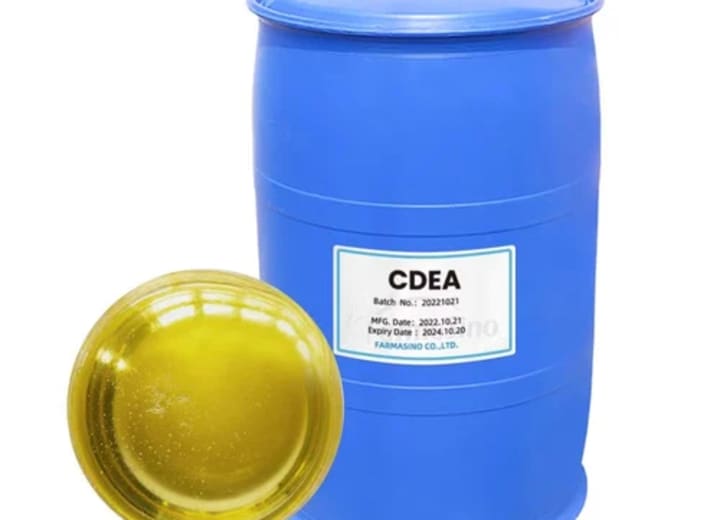
Sodium Cumene Sulfonate is chemically classified as an anionic surfactant, meaning it carries a negatively charged sulfonate group attached to a cumene-derived hydrocarbon chain. This amphiphilic structure allows it to interact with both water and oily substances, making it highly effective at lowering surface tension and enhancing solubilization.
Its production involves sulfonation of cumene with sulfur trioxide or oleum, followed by neutralization with sodium hydroxide to produce the sodium salt form. The result is a water-soluble liquid with a robust sulfonate head group that anchors to water molecules, while the hydrophobic alkyl group associates with oils and grease. This dual affinity promotes the formation of micelles, which trap and emulsify oily soils, enabling easier removal during cleaning.
Key performance features include excellent solubilizing capability, which helps dissolve difficult-to-incorporate ingredients like perfumes or other surfactants, thereby stabilizing the formulation. The product’s liquid form also aids compatibility with various detergent bases, whether powder or liquid.
Its compatibility extends well within detergent and soap formulations, where it improves foam stability without excessively increasing viscosity. That balance allows manufacturers to design products that deliver appealing suds and effective cleaning with manageable texture and rinsing behavior.
Because purity levels and grade can vary, customers should confirm exact specifications with Zenco Systems Ltd at the time of order. This ensures the product matches their formulation requirements precisely. The supplier’s commitment to consistent quality across shipments supports reliable manufacturing and supply chains across East Africa.
In addition to detergents, Sodium Cumene Sulfonate finds use in textile processing to aid emulsification and fabric wetting, and in leather treatment where cleaning and conditioning agents benefit from its surfactant action. Its role in agricultural formulations typically involves helping to disperse active ingredients uniformly.
Overall, the chemical’s ability to function as both a solubilizer and surfactant makes it a versatile ingredient, with performance advantages grounded in its chemical structure and physical properties.